Capital: Suva
Language: English, Fijian, Hindi
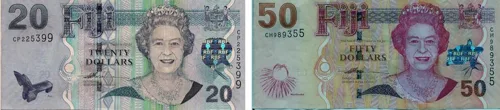
Currency: Fijian dollar
Fiji is an island country in the Pacific made up of more than three hundred islands, only some of which are inhabited. About nine hundred thousand people live here, and the capital is Suva. Fijians greet each other with the word «bula!» and are famous for their friendliness.
🌿 Nature
Most of the islands are volcanic, with green hills and turquoise lagoons. Coral reefs teem with fish, which is why Fiji is called the «soft coral capital». Rainforests on the island of Taveuni grow right by the line where the date changes — the 180° meridian. Bright parrots live in the forests, and sea turtles lay eggs on the beaches.
📜 History
The first seafarers, the Lapita, came here about three thousand years ago. In 1643 the Dutchman Abel Tasman saw the islands, and in 1874 they became a British colony. Workers from India were brought to the sugar plantations, so descendants of Indians live here today too. Fiji gained independence on 10 October 1970.
👨👩👧 People and culture
Fijians drink «kava» — a drink from the root of the pepper plant, served at ceremonial gatherings. Favourite food is «lovo», a dish cooked in an earth oven, and fish in coconut milk. Traditional houses are «bure» with thatched roofs. The «meke» dance tells a story. English, Fijian and Hindi are spoken here.
🏛️ What to see
- Taveuni island and the date line
- The Mamanuca lagoons
- The beaches of Viti Levu
- The rainforests of Taveuni
- The hot springs and mud baths of Nadi
- Fire-walking on Beqa island
✨ Fun facts
- Fiji's rugby sevens team won Olympic gold in 2016
- The date line, the 180° meridian, passes through Taveuni
- In Fiji people greet each other with «bula!»
- The Fiji islands are a centre of «soft corals»
- On Beqa island there is a fire-walking ceremony over hot stones
- The kava drink is made from a plant root and drunk in turns
Videos
- Videos🇵🇱
- Videos🇵🇱
- Videos🇵🇱
- Song🇬🇧